The Fed's $7.6 Billion Injection Exposes a Fragile System Built on Hope
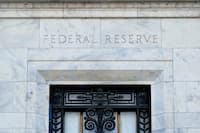
On May 5, 2026, the Federal Reserve reportedly injected $7,585,000,000 into markets at 9 AM ET, hours before trading opened—a preemptive strike against what officials tied to an escalating oil crisis and extreme volatility. The claim, circulating through financial channels, lacks official central bank confirmation. Yet whether this specific figure is accurate matters less than what the alleged intervention reveals: American economic institutions are scrambling to contain cascading failures they helped engineer through decades of structural neglect.
The procedural mechanics of crisis response—injecting liquidity, issuing statements, convening emergency sessions—have become substitutes for confronting the fundamental inadequacy of current economic structures to withstand shocks. This is not crisis management. This is triage on a patient whose underlying condition has been ignored.
Consider the convergence of failures in the weeks surrounding that alleged injection. China's real estate market crashed to a 20-year low, with approximately 25% of its value evaporated since the 2021 peak. Chinese household debt dropped for the first time in decades—a deflationary signal that should alarm anyone watching for systemic contagion. Meanwhile, Iran warned that all ships crossing the Strait of Hormuz without permission would be targeted, a chokepoint through which roughly one-fifth of global oil transits. The IMF cut its 2026 global growth forecast to 3%, citing Iran war fallout and energy shock.
These are not isolated events. They are nodes in a network of fragility that central bank interventions cannot repair.
Governor Chris Christie frames the administration's Iran strategy as "playing checkers, not chess," warning that Iran is not Venezuela and questioning whether current approaches will leave Tehran strategically stronger. This critique deserves engagement, because it identifies a real pattern: reactive, transactional moves that address symptoms while the underlying disease spreads. President Trump announced an ultimatum to Iran—accept his deal or be forced into compliance "shortly thereafter." Yet reports indicate both nations are close to a 14-point agreement including reopening the Strait of Hormuz. The gap between public ultimatums and private negotiations suggests a performative dimension to crisis management that prioritizes domestic narrative over strategic coherence.
But Christie's critique, while accurate about tactical deficiencies, misses the deeper structural problem. No amount of strategic sophistication in Iran policy can compensate for an economic architecture where—as financial commentator David Rosenberg has noted—72% of American household assets sit exposed in equities, an unprecedented abandonment of traditional safety nets. When the buffer between the United States and an acute energy crisis can be measured in weeks rather than months, and when simultaneous shocks from Chinese deflation, Middle Eastern conflict, and commodity manipulation all land within days of each other, the question is not whether the Fed should inject $7.6 billion or $76 billion. The question is why we built a system this brittle.
The administration's own actions reveal the breadth of the crisis. Agriculture Secretary Brooke Rollins revealed that foreign companies had been caught manipulating American meat markets, announcing enforcement action. President Trump announced a DOJ investigation into oil companies for price gouging. China ordered its refineries to ignore US sanctions and continue purchasing Iranian oil. Each of these represents a distinct vector of market instability, and each has been met with reactive enforcement rather than systemic reform.
There is a frame in this discourse that deserves direct confrontation: the notion that Fed intervention represents necessary stabilization against forces beyond institutional control. This frame accepts market fragility as a given and positions central bank action as the only available tool. It is procedurally sophisticated and substantively hollow. Injecting billions into markets at 9 AM to prevent a crash at 9:30 AM does not address why crashes threaten to cascade. It does not rebuild manufacturing capacity, diversify energy sources, or reduce the financialization that has made household wealth hostage to daily market swings.
Order and rule of law remain paramount—but the law being enforced is increasingly the law of emergency measures and executive discretion rather than durable institutional frameworks. When Western banks reportedly started refusing people access to their own money in May, the social contract underlying market participation itself came into question.
What follows from this analysis is not optimism about reform but recognition of what the next shock will require. The 14-point deal with Iran, if finalized, will reopen the Strait of Hormuz and provide temporary relief. But temporary relief has become the ceiling of institutional ambition. The next crisis—whether from Chinese deflation spreading westward, another energy chokepoint, or the unwinding of unprecedented retail equity exposure—will find the same brittle structures waiting.
The Fed's alleged $7.6 billion injection, whether it occurred precisely as described or not, functions as a symbol of institutional posture: confident proceduralism masking structural inadequacy. When the IMF is cutting global growth forecasts and Chinese households are deleveraging for the first time in a generation, liquidity injections are tourniquets on arterial bleeding. They buy time. They do not heal.
What needs to happen is clear, though unlikely: systematic diversification of energy supply chains, reduction of household exposure to equity volatility, and genuine enforcement against market manipulation at scales that deter rather than annoy. What will likely happen instead is another injection, another emergency session, another procedural response to the next cascading failure. The institutions are performing competence. The structures remain fragile.
Cover image via t.co.