Mary Grace Piattos and the P125 Million That Vanished in Eleven Days
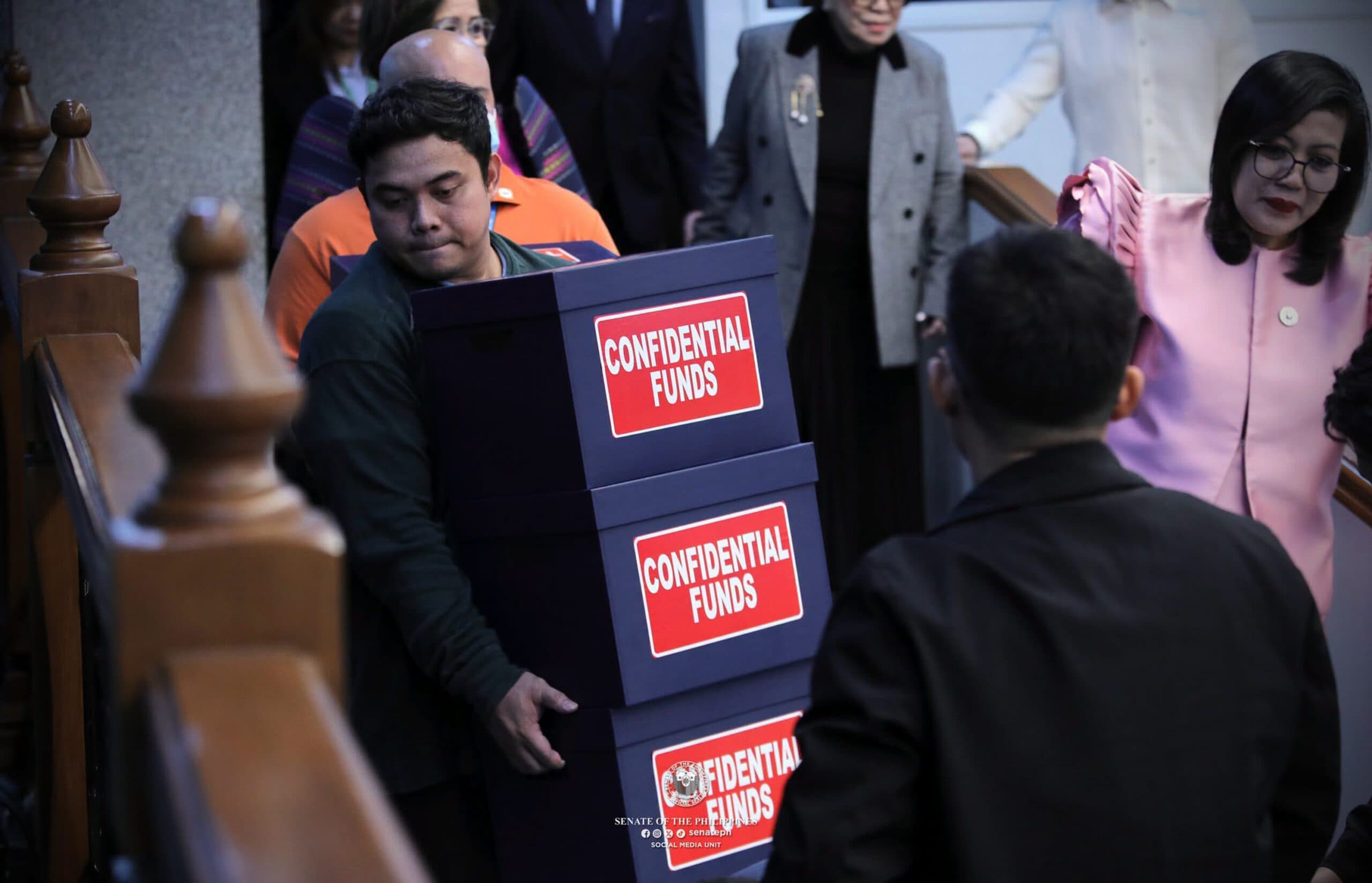
On August 3, 2026, prosecution counsel Lorna Kapunan held up acknowledgment receipts bearing the names of confidential fund recipients: "Mary Grace Piattos," "Andy C. Lim," and "Patty Ting." These names — a snack brand, a pun, and what reads like a joke — appeared on documents purporting to account for P125 million in public funds withdrawn by the Office of the Vice President over eleven days in December 2022.
The Senate impeachment trial against Vice President Sara Duterte has now produced what months of congressional hearings could not: documentary evidence of systematic fraud that no procedural defense can adequately explain.
Commission on Audit auditor Roderick Wamil testified on August 3 that the OVP's liquidation of these confidential funds was "marred by irregularities" — late-dated receipts, missing supporting documentation, and systematic gaps that suggest not mere carelessness but deliberate concealment. That same day, Wamil testified that the OVP used confidential funds to purchase P40 million in medicines, a category explicitly prohibited under auditing rules. The prosecution has also established through testimony that the P612.5 million in funds at issue were traced to public money.
The defense's response has been procedural theater of the thinnest kind. On August 4, VP Duterte's counsel invoked a 1992 COA circular to justify absent receipts, an argument the prosecution countered by noting that stricter 2015 audit regulations supersede it. On August 5, the defense argued that no COA regulation prohibits spending P125 million in eleven days. This is technically true and entirely beside the point. No regulation prohibits spending that sum in an hour. The question is not speed but substance: where did the money go, and why do the receipts bear names that appear fabricated?
VP Duterte's camp has acknowledged the P125 million expenditure but promised only "an explanation" — notably, not documentation, not accounting records, not the names of actual recipients. When bank officials testified on July 29 that the encashment was "unusual" despite procedural compliance with withdrawal protocols, they confirmed something significant: the banking system flagged this as abnormal even as it processed the transaction. Unusual but procedurally compliant describes a loophole exploited, not a rule followed.
Sara Duterte holds a singular distinction now established in the trial record. A COA auditor testified that she was the only vice president and DepEd secretary ever to receive confidential fund appropriations among the past three administrations. This is not precedent; it is anomaly. The confidential fund mechanism was never designed for these offices, and Duterte's use of it produced exactly the accountability vacuum one would predict.
The competing frame advanced by the defense — that this is procedural compliance within existing rules — collapses under the weight of the evidence presented. Procedural compliance does not produce receipts signed by "Mary Grace Piattos." Procedural compliance does not generate P40 million in prohibited medicine purchases. Procedural compliance does not result in systematic documentation gaps flagged by the government's own auditors. The defense is not arguing that the money was spent properly; they are arguing that the rules governing how to prove it was spent properly are flexible enough to accommodate their failure to prove anything at all.
What the impeachment trial has accomplished, whatever its ultimate verdict, is the creation of a permanent public record. The livestreamed testimony, the marked exhibits, the auditor statements — these now exist in the historical record independent of whether the Senate votes to convict. The arithmetic errors discovered in COA disallowance notices during examination on August 5 complicate the prosecution's case but do not erase the fundamental pattern: public money withdrawn at unprecedented speed, liquidated through documentation bearing fabricated names, spent on prohibited categories, and defended through procedural technicalities rather than substantive accounting.
I have noted previously that sixteen days into this trial, the prosecution had completed evidence presentation for only one of four articles. That assessment stands, but the Article I evidence now entering the record on confidential funds misuse is more damaging than I anticipated. The prosecution's characterization of this as a "scam" may be rhetorically aggressive, but it is not unsupported by the documents they have presented.
The Senate Impeachment Court granted banks additional time on August 3 to submit VP Duterte's subpoenaed financial documents. What those records show will determine whether the P125 million can be traced to actual expenditures or whether it simply disappeared into a system designed to prevent accountability. But the receipts already in evidence — bearing names that mock the very concept of documentation — suggest we already know the answer.
The prosecution must now convert documentary evidence into a conviction that two-thirds of senators will support. The defense must explain why acknowledgment receipts bearing snack-brand names should be accepted as legitimate government accounting. One of these tasks is harder than the other, but in Philippine politics, the relationship between evidence and outcome has never been straightforward.
Cover image via rappler.com.